Breastfeeding the First Two Weeks: What Nobody Warns You About
What's normal, what helps, and when to call for support.

Nobody tells you that the first two weeks are a skill you have to learn in public, on no sleep, with someone crying at you. I had read the books. I had not read anything that said day three would feel like my body had been swapped for someone else's. This is the honest version — what's normal, what genuinely helps, and the specific things that mean you should put the phone down and call someone today.
Days one and two: it is not supposed to be a fountain
For the first 48 hours you are making colostrum, and there is barely any of it — teaspoons, not ounces. That is by design. A newborn stomach is the size of a cherry on day one. Everyone around you will stare at a drop on a spoon and ask if that is enough. It is.
What matters in these two days is not volume, it is frequency and position. Eight to twelve feeds in 24 hours, including at night. If your baby is sleepy and hard to rouse — common after a long labour or an epidural — you may need to wake them. Ask your midwife or nurse to show you how, because 'just wake them' is not instructions.
Day three: the wall nobody mentions
Your milk comes in, and it does not feel like a gentle transition. Breasts that were soft are suddenly hot, heavy and rock-hard, sometimes up into the armpit. You may run a low fever. You may cry at a commercial. This is the day most people quit, and it is almost entirely a timing problem: the worst 24 hours of the physical process land in the same window as the biggest hormone crash of your life.
What helps is mechanical, not emotional. Feed or express often — the pressure is fluid, and removing it is the treatment. A warm shower or a warm compress just before a feed gets things moving. Cold packs after. Reverse pressure softening, if the breast is too hard for baby to latch onto, is a real technique and worth looking up or asking about.
The latch is the whole job
Soreness in the first minute as the nipple stretches is normal. Soreness that continues through the feed, or pain that gets worse over days, is a latch problem and it does not fix itself with grit. Nipple damage is the thing that ends breastfeeding for people who wanted to continue.
A workable latch looks like: chin pressed into the breast, nose clear, more of the areola in the top of the mouth than the bottom, lips flanged out, and audible swallowing rather than clicking. If it feels like a biting sensation or you hear clicking, break the seal with a clean finger and start again. Doing that six times in one feed is not failure, it is the lesson.
Cluster feeding is not a supply problem
Somewhere in the first two weeks your baby will want to feed almost continuously for a few hours in the evening. This is normal, it is not a sign your milk is inadequate, and it does not mean you need to top up with formula unless a clinician has told you to.
It is also the single most common trigger for the thought 'my body is not working'. It is your body working. Cluster feeding is how the supply signal gets set for the weeks ahead. Put a show on, get water within reach, hand the baby to someone else between feeds if you can, and stop counting.
What actually helps in week one
Two hands-free things and one support person. A nursing pillow so you are not holding the baby's full weight in your arms for nine hours a day. Hydrogel pads kept in the fridge for the raw days. And someone whose job is to bring you water and take the baby for twenty minutes after a feed so you can sleep, not to comment on your technique.
Lower your bar for everything else. In week one the only outcomes that matter are: baby is feeding often, baby is producing wet nappies, and you are not in escalating pain. Laundry is not on the list.
The first-72-hours kit
A nursing pillow that puts the baby at breast height, not your arms
Hydrogel pads, kept in the fridge
A large water bottle with a lid you can open one-handed
Lanolin or a nipple balm that does not need wiping off
Two or three soft nursing bras, no underwire
The number for your local IBCLC saved in your phone before you need it
A note of the wet-nappy count, so you are not guessing at 3am

Get this list as a one-page checklist
Please enter your email address.
Gear that made this easier

The single most-used thing of the first month. Puts the baby at the right height so you are not carrying their weight in your forearms for hours.

Kept in the fridge, these are the difference between dreading a feed and tolerating one in the raw first week. Use them while you fix the latch, not instead of fixing it.
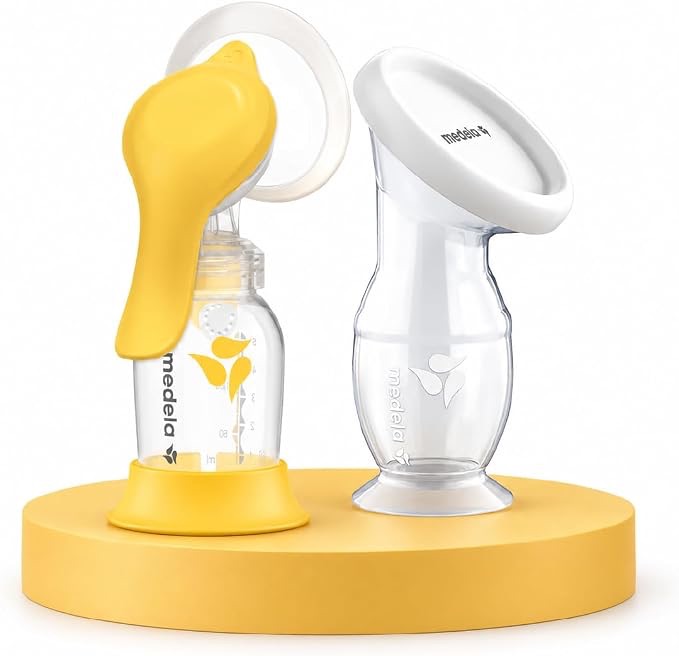
Not for building a stash. For taking the edge off engorgement at 4am without hauling out the electric, and for softening a rock-hard breast enough that the baby can latch.
Call someone today, not next week
These are the things that are not "give it a few days". Call your midwife, obstetrician or pediatrician the same day — and if it is the weekend, call the out-of-hours line rather than waiting for Monday.
- A fever over 100.4°F / 38°C, or feeling flu-like with a hot, wedge-shaped red patch on one breast — possible mastitis
- Nipple damage that is cracking, bleeding, or getting worse rather than better
- Baby is not waking for feeds, is very hard to rouse, or is feeding fewer than eight times in 24 hours
- Fewer wet nappies than expected for their day of life — this is the number to actually track
- Weight loss of more than 10% of birth weight, or no weight gain by two weeks
- Jaundice that is deepening, or spreading to the palms and soles
- You feel like you cannot cope, or you are having thoughts of harming yourself or the baby — call now, day or night
This is one parent's experience, not medical advice, and every feeding journey is different. Ask your midwife, pediatrician or an IBCLC (International Board Certified Lactation Consultant) about anything in here that worries you. Many insurance plans cover lactation visits — the free breast pump guide on this site walks through how to ask.